
A burst pipe insurance claim Long Island property owners file needs to be documented for its full spread, not just the source, and Republic Claims Associates is the public adjuster property owners call to do exactly that. A burst pipe rarely stays a one-room problem in Long Island’s older homes and multi-unit buildings. Water travels down through floors, along framing, and into rooms and shared walls the original leak never touched, and by the time it’s fully contained, the claim involves far more than the room where the pipe actually failed.
Republic Claims Associates represents the property owner in capturing that full extent of damage. We document everywhere the water reached, not just the visible source, and negotiate the settlement so your carrier isn’t setting the scope of the claim on its own.
Why Are Long Island Properties Especially Exposed?
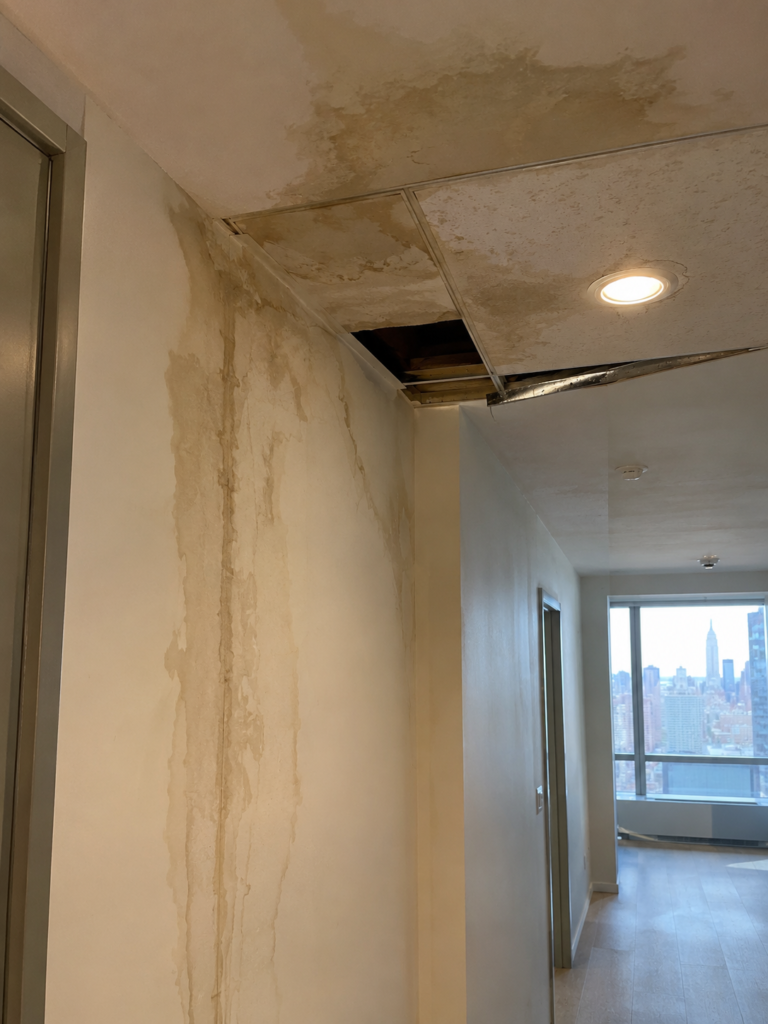
A large share of Nassau and Suffolk Counties’ housing stock, particularly older homes
and buildings, still runs on original or aging plumbing. That plumbing fails more often than modern piping, and it fails in ways that are harder to detect early, since corrosion-related failures often develop slowly before rupturing suddenly.
Winter cold snaps add a second risk. Unheated spaces, exposed pipes in basements, and vacant seasonal homes during cold weather are the most common conditions behind frozen pipe claims, and a property that sits empty for weeks at a time, common for Long Island’s vacation and seasonal properties, often means a burst pipe goes undiscovered until the damage has already spread significantly.
What Does a Burst Pipe Claim Cover?
Building and structural damage. Drywall, flooring, subfloor, and framing damage in the room where the pipe failed and any rooms or shared areas the water reached afterward.
Contents damage. Personal property, business equipment, or inventory damaged by the water, valued separately from the structural repair.
Mold remediation. Where water damage went undetected or undried for any length of time, mold coverage often becomes part of the claim, subject to your specific policy’s mold provisions.
Loss of rents or additional living expense. If a home or unit becomes uninhabitable while repairs are made, landlord and homeowner policies frequently include coverage for that lost income or displacement costs.
Emergency mitigation costs. Water extraction, drying equipment, and emergency plumbing repairs needed immediately after discovery, which are typically reimbursable as part of the claim.
Why Does Sudden Versus Gradual Decide the Claim?
Insurance carriers draw a hard line between a pipe that bursts suddenly, which is covered, and a slow leak that went undetected for weeks or months, which many policies exclude or limit as a maintenance failure. This single distinction determines more burst pipe claim outcomes than any other factor.
Establishing that timeline accurately, and documenting it before repairs remove the evidence, is the most important thing that happens in the first 48 hours after a pipe failure.
How Do We Handle a Long Island Burst Pipe Claim?
- Immediate documentation. We inspect the property as soon as possible after discovery, before repairs or drying equipment removes evidence of the full extent of the damage.
- Cause and timeline evidence. We document what supports a sudden failure, which is central to full coverage rather than a reduced or disputed settlement.
- Full-scope assessment. We track everywhere the water traveled, including other rooms and shared areas, not just the point where the pipe failed.
- Policy review. We identify loss of rents, additional living expense, and mold coverage that may apply beyond the basic structural repair.
- Negotiation. We manage every conversation with the insurance company through to final settlement.
Why Choose Republic Claims for a Burst Pipe Claim?
Pinpointing a sudden-versus-gradual timeline takes someone who’s argued that exact distinction with carriers for decades. Frank Rivela has 43 years in the insurance industry and holds the Senior Professional Public Adjuster designation. The firm he founded in 1989 operates a Hampton Bays office serving Nassau and Suffolk Counties directly and maintains accreditation with the National Association of Public Insurance Adjusters.
We handle burst pipe and water damage claims for homes, businesses, and seasonal properties across Long Island. For the fuller range of water-related losses, including storm and flood damage, see our water damage public adjuster page. A burst pipe that damages multiple units or triggers extensive loss of rents may qualify as a large loss claim.
How Does New York’s Fee Cap Protect You?
New York law requires us to put our fee percentage in writing before any work starts. That fee is capped at 12.5 percent of the recovery and is contingency-based, so there’s nothing owed upfront.
Frequently Asked Questions
Is a burst pipe always covered by homeowners or landlord insurance? Generally yes, if the pipe burst suddenly rather than leaking gradually over time. The distinction between sudden and gradual damage is what most carriers use to decide coverage, which is why documenting the timeline matters.
Does insurance cover a frozen pipe that bursts in an unoccupied seasonal home? Usually yes, though some policies require reasonable precautions, such as maintaining heat or shutting off the water supply, to have been taken while the property sits vacant.
What if a burst pipe damages a shared wall or the unit below mine? This typically becomes part of the same claim or a related claim under the building’s master or landlord policy, depending on the property structure and lease or ownership terms.
Does my policy cover mold that develops after a burst pipe? Many policies cover mold resulting directly from a covered water loss, though coverage limits vary.
How fast do I need to report a burst pipe to my insurance company? As soon as possible. Prompt reporting and documentation support a sudden-loss determination and reduce the risk that a carrier later argues the damage developed gradually.
If your Long Island property has burst pipe damage, documenting the full spread and the failure timeline early protects your claim. Call us at (800) 246-4417 for a free claim review, or request a free consultation online.